Circular Living: From Sustainability to Regeneration
– 4 min read


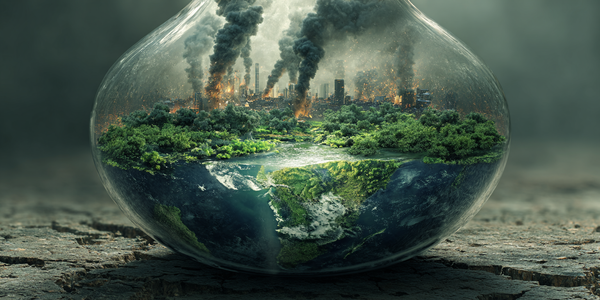
Why the Future Isn’t About Doing Less Harm — But Doing More Good
“Sustainability” was the buzzword of the last decade.
“Regeneration” will be the movement of the next.
For years, business framed environmental responsibility as damage control — reduce, offset, neutralize.
But consumers, investors, and next-generation leaders are no longer satisfied with “less bad.” They want net positive: systems that restore, renew, and rebalance.
This shift marks the rise of Circular Living — not just circular production, but circular thinking: a model that sees waste as value, consumers as participants, and growth as stewardship.
The frontier of capitalism is no longer efficiency — it’s repair.
Sustainability / Business / Design / Innovation
Region: Global (Europe, US, Asia-Pacific, Nordics)
Topic: Circular Economy, Regenerative Business, Eco-Innovation
For 20 years, “sustainability” has been both a goal and a gimmick.
It made companies feel good and consumers feel less guilty, but it didn’t change the underlying math: extraction still outpaces regeneration.
The language of “carbon neutral” and “net zero” was never enough — it was like bragging about not crashing the car while still driving toward the cliff.
Enter a new philosophy: regeneration.
Born from ecology and biomimicry, it sees business not as a linear process of taking and selling, but as a living system that must replenish what it consumes.
Culturally, this aligns with a deeper desire for reciprocity.
People are tired of “less bad.” They want to live in alignment — where their consumption feels like contribution.
Economically, it’s becoming a necessity.
Climate volatility, resource scarcity, and regulation are forcing brands to redesign not just products but principles.
Circular Living isn’t just a sustainability strategy.
It’s the new social license to operate.
Sustainability fatigue is real.
Consumers are done being shamed; they want to be empowered.
This is why the next growth engine won’t come from sustainability departments — it’ll come from innovation labs.
Circular Living reframes environmentalism from moral burden to business opportunity.
For brands, this means moving from “corporate responsibility” to cultural leadership.
Being green is no longer about compliance — it’s about creativity, profitability, and long-term brand equity.
For strategists, the question changes from “How can we minimize harm?” to “How can we design value that multiplies?”
The brands that thrive will be those that turn waste, time, and community into renewable assets.
Circular Living is capitalism’s course correction.
It’s the evolution from extractive growth to regenerative growth — an economic immune response to the damage of the linear age.
Where the 20th century prized speed, scale, and consumption, the 21st prizes symbiosis.
The winners will be those who build brands that give back more than they take.
This isn’t idealism — it’s advantage.
Because regeneration compounds.
When you restore soil, you grow better crops. When you restore trust, you grow better customers. When you restore ecosystems, you grow resilience.
Circular Living is not charity — it’s enlightened self-interest.
It’s the next competitive edge: the ability to create profit and renewal at the same time.
Regenerative brands don’t just survive disruption — they reverse it.
Every product must have a plan for its second life.
Sustainability doesn’t need to be serious — it needs to be seductive.
The future is co-restoration, not solo performance.
Sustainability told us to do less harm.
Regeneration tells us to do more good.
Circular Living isn’t about guilt — it’s about genius.
It’s how we evolve from consumers to custodians, from extractors to collaborators.
In the next decade, the most valuable brands won’t be the biggest or the boldest —
they’ll be the ones that make the world feel more alive because they exist.
That’s not activism.
That’s good business.