In Brief
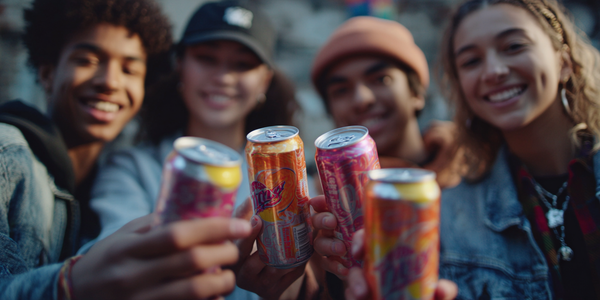
The functional drinks market has hit its inflection point. What began as niche health hacks — probiotics, adaptogens, “clean” energy — is now being absorbed by Big Beverage. PepsiCo has gone prebiotic, Bloom is rewriting energy, and hydration brands are behaving more like wellness ecosystems than soft-drink labels.
The real contest isn’t what benefit you claim — it’s how credibly you deliver it and how habitually people use it. The beverage is no longer a treat; it’s infrastructure.
Signal — What’s Happening
The global functional beverage market now exceeds $130 billion and continues to climb steadily toward $175–180 billion by 2030. U.S. sales alone hover near $50 billion.
PepsiCo’s near-$2 billion acquisition of Poppi crowned the new “functional cola” era, while its own Prebiotic Cola line signals how deep the majors are diving.
Start-ups like Bloom Sparkling Energy are scaling faster than legacy brands once did, blending caffeine, fiber, and botanicals into hybrid formats.
At the same time, private-label functional lines and ready-made formulations now allow anyone — from fitness creators to boutique cafés — to launch credible RTD wellness products in months, not years.
Relevance — Why It Matters
- The category is transitioning from innovation to absorption.
- Barriers to entry are collapsing thanks to contract manufacturing and turnkey formulas.
- Consumers expect proof, transparency, and integration into daily life.
- For agencies and brand owners, differentiation now depends on trust architecture and behavioral design, not ingredient novelty.
Insight — What It Means
- Functional is foundational. Drinks are morphing from optional boosts to part of daily health systems — hydration as operating system.
- Trust replaces trend. Consumers reward science, certification, and transparency over influencer hype.
- Layered benefits win. The next-gen SKU stacks gut + mood + focus in one can.
- Design signals truth. Texture, color, typography, even bubble density now act as shorthand for credibility.
Shift — What’s Changing
We’re crossing from functional fringe to functional mainstream.
CPG giants aren’t merely acquiring start-ups; they’re re-engineering their portfolios around wellness.
Consumers no longer ask “Is it functional?” but “How well does it work, and can I trust it?”
The competitive axis has moved from flavor and format to proof and ritual.
Opportunities — Where to Build Advantage
1. Own the Trust Layer
Credibility is the new marketing spend.
Plays
- Strategist: Position around verified performance — be the bridge between gimmick and science.
- Creative Director: Storyline campaigns around labs, origins, and third-party validation.
- Design Director: Use transparency, certification marks, and honest material cues.
- Copywriter: Speak with authority — “clinically calibrated,” not “magic.”
- Innovation: Partner with universities or research labs for co-branded data.
2. Segment by Functional Archetype
Own a benefit cluster, not a buzzword.
Plays
- Strategist: Build a matrix: core line + booster line + occasion line.
- Creative Director: Craft narrative worlds per benefit (gut = garden, mood = forest).
- Design Director: Codify archetypes visually — calm, focus, energy each with its own grammar.
- Copywriter: Use micro-mantras — Sip Calm. Reset Focus. Wake Bright.
- Marketing: Target audiences by need-state, not demo.
3. Embed Habit and Ritual
A drink that becomes a ritual becomes revenue.
Plays
- Strategist: Design subscription-first models with ritualized cadence.
- Creative Director: Visualize “moments of use” — morning reset, 3 PM ally, post-workout reboot.
- Design Director: Packaging that stacks or measures daily use.
- Copywriter: Language of continuity — “Part of your every day.”
- Product: Add companion products — sachets, booster shots, digital reminders.
4. Use Private-Label as a Test Bed
Functional drinks are now a sandbox for fast iteration.
Plays
- Strategist: Treat private-label as MVP to test flavor × benefit hypotheses.
- Creative Director: Co-brand “powered by [Your Brand]” partnerships.
- Design Director: Create modular identity systems for multiple retail partners.
- Copywriter: Keep the message portable across SKUs.
- Marketing: Turn early results into proof-of-concept for scale.
Regional Plays — Europe / Nordics / US
- Scandinavian clean-label reputation = built-in trust currency.
- EU nutrition standards can act as de-facto brand differentiators.
- DTC wellness brands can turn daily functional hydration into subscription ecosystems.
Closing Reflection
The future of beverages isn’t about chasing the next miracle fruit or amino acid. It’s about designing trust and ritual at scale.
Functional drinks are no longer an accessory to wellness — they’re its delivery system.
Sources & Signals
Innova Market Insights – Top Beverage Trends 2025, Feb 2025.
GlobeNewswire – Functional Beverages Market Outlook 2025–2030, May 2025.
Glanbia Nutritionals – U.S. Functional Beverage Market Insights, Feb 2025.
AP News – PepsiCo Acquires Poppi for $1.95 Billion, Mar 2025.
Food & Wine – Pepsi Launches Prebiotic Cola, Apr 2025.
BevSource – Beverage Trends 2025, Jan 2025.
Forbes – The Rise of Functional Beverages Among Millennials and Gen Z, Apr 2025.