In Brief:
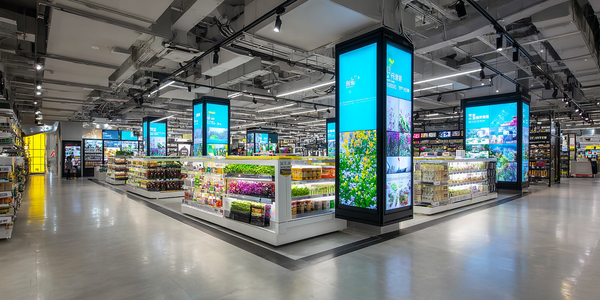
The most powerful advertising platforms in 2025 aren’t Google or Meta — they’re supermarkets, marketplaces, and e-commerce apps. Retailers are turning their transaction data into gold, building retail media networks (RMNs) that sell ad space across websites, apps, in-store screens, and delivery boxes. The result: a new media-industrial complex where brands must pay rent simply to be seen on the digital shelf. What was once a marketing expense is now a cost of entry. The fight for visibility is becoming retail’s version of the algorithmic arms race.
Category:
Retail & E-Commerce / Marketing / North America, UK, Europe
Signal — What’s Happening
- Retail media spending in the U.S. surpassed $62 billion in 2025, growing nearly 20% year-over-year (Insider Intelligence).
- Walmart Connect, Amazon Ads, Instacart, Tesco Media & Insight, and Carrefour Links are now among the top ad networks globally.
- Retailers are building closed-loop ecosystems that merge commerce, content, and ad tech — letting brands advertise, transact, and measure ROI inside one environment.
- With third-party cookies disappearing by end of 2025, retail media’s first-party data advantage makes it the new performance-marketing frontier.
Relevance — Why It Matters
The digital shelf is no longer democratic.
If you’re not visible in retail search results, you effectively don’t exist. For consumer brands, retail media has gone from optional to mandatory — yet it’s creating a dangerous dependency. Retailers are becoming both gatekeepers and landlords, charging brands to reach their own customers.
For agencies, it’s a new creative and analytical discipline. For brands, it’s the start of a pay-to-play era that will redefine what “marketing mix” even means.
Insight — What It Means
Retail media isn’t advertising — it’s data arbitrage.
Retailers realized they could monetize not just the product, but the path to it. Shopper data — who browsed, bought, paused, or returned — is more precise than anything a social platform can offer.
We’re witnessing a structural shift: attention has moved downstream, from brand awareness to point-of-purchase micro-moments. Whoever owns the last click now owns the margin.
Shift — What’s Changing
- From social feeds to shopping feeds: Consumers now discover products where they buy them.
- From cookies to carts: Targeting moves from behavioral data to transaction data.
- From ad platforms to ecosystems: Retailers act like walled gardens — controlling audience, placement, and reporting.
- From brand storytelling to shelf dominance: Success metrics shift from impressions to add-to-cart rate.
Opportunities — Where to Build Advantage
Master the new advertising triad: placement, relevance, and proof.
Plays:
- Strategist (Agency): Create unified media frameworks integrating Amazon, Walmart, and grocery RMNs.
- Creative Director: Develop native ad formats that blend seamlessly with e-commerce UX.
- Design Director: Build modular creative templates optimized for product tiles, shoppable videos, and AR previews.
- Copywriter: Craft conversion-focused microcopy (“Shop now,” “Add before it’s gone”) calibrated to retail context.
- Insights (Brand): Track closed-loop metrics — from impression to sale — using retailer dashboards.
- Strategy & Brand: Define where to invest vs. resist — not every shelf is worth the spend.
- Marketing & Comms: Shift budget from social awareness to retail media ROI channels.
- Offering & Innovation: Partner with RMNs for first-mover pilots and data-sharing experiments.
2. The First-Party Data Renaissance
Own your audience again — before retailers own it for you.
Plays:
- Strategist: Build long-term CRM and loyalty systems to reclaim customer insight.
- Creative Director: Turn owned channels (email, app, loyalty) into high-value content ecosystems.
- Design Director: Integrate UX that rewards account logins, consent, and personalization.
- Copywriter: Communicate the value of data-sharing (“Help us tailor your experience”).
- Insights: Merge retail media performance data with your own to see the full journey.
- Strategy & Brand: Treat data ethics as part of brand trust — transparency builds retention.
- Marketing & Comms: Create opt-in “data-for-value” exchanges (exclusive offers, previews).
- Offering & Innovation: Develop new loyalty tiers or memberships that generate insight, not just points.
3. The Creative Intelligence Layer
Make creativity measurable — and measurement creative.
Plays:
- Strategist: Blend AI-driven targeting with emotional storytelling for high-performance creative.
- Creative Director: Treat data as a creative brief — design concepts around behavioral clusters.
- Design Director: Prototype ad variations for different shopper mindsets (deal-seeker, brand loyalist, browser).
- Copywriter: Humanize performance copy — metrics can sell, but emotion seals it.
- Insights: A/B test creative in live retail environments; use predictive analytics to refine narratives.
- Strategy & Brand: Position your brand as both data-smart and creatively human.
- Marketing & Comms: Use retail media as testbeds for campaign ideas before mass rollout.
- Offering & Innovation: Build “creative intelligence” partnerships with RMNs to co-own insights.
The Bottom Line
Retailers are no longer just selling shelf space — they’re selling audience space.
For brands, this is both an opportunity and a trap: unprecedented precision, but unprecedented dependence.
The smart move is dual play — leverage retailer data while building your own. Because in the new ad economy, whoever controls the feedback loop controls the future.
Key Sources & Signals
- Insider Intelligence (2025) U.S. Retail Media Spend Report
- WARC: “The Next $100B Ad Market: Retail Media 2026 Forecast”
- Deloitte Digital Retail Outlook
- Tesco Media & Insight, Carrefour Links, Amazon Ads case studies
- McKinsey: “Data Moats and the New Retail Media Frontier”