Type
Micro Trend
Category
Retail & Food Culture / Europe, UK & Ireland
In Brief
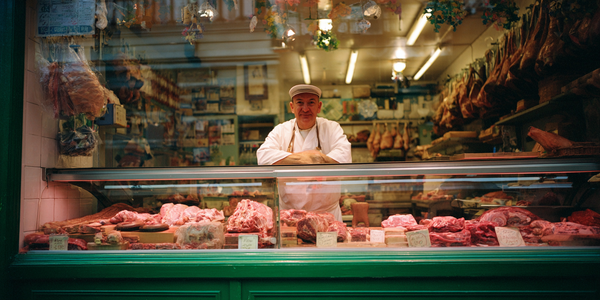
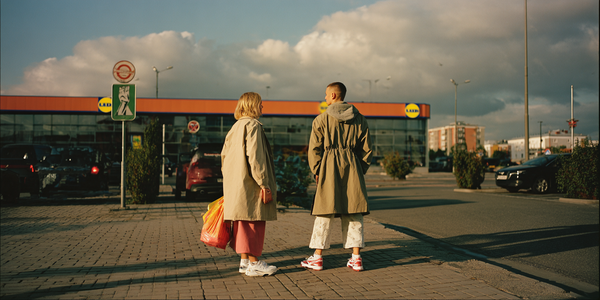
In the age of shrinkflation and supermarket fatigue, the local butcher is back—and cooler than ever. Across the UK and Ireland, inflation has unintentionally revived one of the oldest retail formats: the neighborhood meat counter. But this is no dusty throwback. A new generation of butchers are mixing craftsmanship with brand-building, TikTok storytelling, and ethical sourcing. When supermarket trust is down and price transparency is up, authenticity now smells like dry-aged beef.
Signal – What’s Happening Now
- Independent butchers in the UK reported a 12% YoY sales increase in 2025, reversing a decade of decline (AHDB, 2025).
- Irish artisan meat shops are experiencing similar momentum—particularly those leaning on local farms and traceability claims.
- Social platforms like TikTok and Instagram are driving exposure: #ButcherTok has over 180M views, showcasing craft cuts, cooking tutorials, and “know your meat” education.
- UK consumers rank local sourcing as the top trust driver in meat purchases, surpassing even organic and price (Mintel, 2025).
- The average meat buyer in Britain now shops 1.5x more often at local butchers than pre-pandemic, favoring perceived freshness and service over convenience.
Relevance – Why It Matters
Inflation made supermarkets feel exploitative—endless price hikes, hidden shrinkflation, and impersonal service.
The butcher, paradoxically, became the honest alternative.
While Tesco cuts corners, the local shopkeeper explains costs, portion sizes, and sourcing face-to-face.
Consumers are rediscovering the value of transparency over the illusion of cheapness.
This shift gives small F&B players a cultural opening: heritage feels revolutionary again.
Insight – What It Means
- Transparency outperforms automation. The personal relationship is the ultimate trust signal in a cynical economy.
- Craft = credibility. “Artisan” no longer signals premium; it signals proof.
- Inflation is re-educating taste. Consumers realize £8 for a local steak that lasts two meals is smarter than £5 for a mass-produced one that doesn’t satisfy.
- The face beats the logo. Butchers and makers are becoming micro-influencers, humanizing an industry that lost its character to efficiency.
Shift – What’s Changing
From mass trust → personal trust.
For decades, supermarket private labels promised reliability. Now, the pendulum swings back to human expertise and place-based authenticity.
In the post-inflation era, “local” isn’t nostalgia—it’s strategy.
The new food economy rewards proximity, transparency, and storytelling over scale.
Opportunities – Where to Build Advantage
1. Heritage as Differentiation
Bring back the personal craft story as a brand moat.
- Strategist Position “local” not as geography, but as philosophy—proximity, integrity, and human exchange.
- Creative Director Campaign: “Know who cuts your meat.” Focus on trust through intimacy.
- Design Director Visual identity rooted in modern heritage—industrial fonts, tactile materials, provenance maps.
- Copywriter Tone of confident simplicity: “We don’t just sell cuts. We know them.”
- Insights Use transparency as the new luxury.
- Strategy & Brand Anchor around education and storytelling, not price.
- Marketing & Comms Spotlight individual artisans and farms.
- Offering & Innovation Launch butcher-branded ready meals or curated meat boxes.
Turn the counter into content.
- Strategist Frame the shop as a live studio for education and entertainment.
- Creative Director Produce series: “Cuts of the Week,” “Meet the Farmer,” or “From Hook to Pan.”
- Design Director Integrate visual storytelling in-store—QR codes to videos, infographics about sourcing.
- Copywriter Conversational tone that translates expertise into authority without arrogance.
- Insights Gen Z wants craft, but delivered via story, not sermon.
- Strategy & Brand Invest in community content over traditional advertising.
- Marketing & Comms Use social video as the new word-of-mouth.
- Offering & Innovation Create educational subscriptions—monthly cuts with recipe cards or video tutorials.
3. Hybridizing the Heritage Model
Blend old-world craft with modern commerce.
- Strategist Combine physical craft with digital convenience—click-and-collect for artisan goods.
- Creative Director Brand the experience, not just the product (“A better way to buy meat”).
- Design Director Clean, contemporary look—avoid kitsch nostalgia.
- Copywriter Taglines like “Old skills, new service” or “Tradition that delivers.”
- Insights Heritage can scale when wrapped in tech-enabled access.
- Strategy & Brand Develop loyalty programs around experience, not discounting.
- Marketing & Comms Highlight craftsmanship + convenience.
- Offering & Innovation Build local co-ops or “butcher collectives” for brand scale with independent soul.
The Bottom Line
Inflation humbled the supermarket and re-crowned the artisan.
In the UK and Ireland, the local butcher now embodies what modern consumers crave most: proof, proximity, and pride.
Craftsmanship isn’t retro—it’s rebellion.
And the smartest brands in 2026 will trade scale for sincerity.