
Business is supposed to be rational. Spreadsheets, forecasts, margins. The language of entrepreneurship is dominated by numbers — growth rates, CAC, LTV, EBITDA. Yet spend enough time around founders, and you notice something else beneath the financial veneer: most of them are frustrated artists.
They say there are three core types of entrepreneurs; The Artist, The Owner, and The Operator. The Owner wants to make money, to stand outside the business. They are not artists. The Operator loves to operate and manage. They are not artists either. But most people are The Artist, entrepreneurs who use business as their canvas. I'm strongly in this category myself. How about you?
I don’t mean that they all paint or play guitar (though many do). I mean that what really drives them isn’t just profit, but creation. The impulse to make something out of nothing. To bend the world, however slightly, into a shape that didn’t exist before. That’s art.
I’ve lived this tension myself. For years I ran brand consultancies where we dressed creativity up in business suits. We’d deliver decks filled with logic and frameworks, remarkable, beautiful design, ideas and all, but behind it all was always something more primal: the thrill of making. Of taking a vague idea and turning it into a product, a campaign, a brand that suddenly existed in the world. Clients thought they were buying strategy. Secretly, they were buying art.
Entrepreneurs, like artists, are fueled by obsession. Van Gogh painted sunflowers until his hand ached. Founders pitch investors, tweak products, and rewrite landing pages long past the point of rational return. Nobody counts the hours when they’re consumed by a vision. That’s not optimization. That’s compulsion
There’s also the matter of beauty — a word rarely used in boardrooms but always hovering in the background. Why does Apple design phone chargers as if they were jewelry? Why does Patagonia fuss over the exact feel of recycled fleece? Why do some entrepreneurs agonize over typography choices in their pitch decks? Because deep down, we’re trying to make something beautiful, not just useful. Beauty is irrational, but it’s the irrational that makes people care.
Of course, business culture tries to suppress this artistic impulse. We’re told to “focus on the customer,” “validate the market,” “optimize the funnel.” Sensible advice, all of it. But notice how the great companies rarely start with customer surveys. They start with founders who have a vision bordering on delusion. Howard Schultz didn’t run focus groups asking if Americans wanted to pay $5 for a latte. He imagined the café as a “third place” and then willed it into existence. That’s art masquerading as commerce.
The danger is that in chasing numbers, we smother the art. Excel can’t measure wonder. KPIs don’t capture magic. And yet it’s often the unmeasurable — the spark of originality, the conviction of a founder, the beauty of a well-designed product — that separates the enduring from the forgettable.
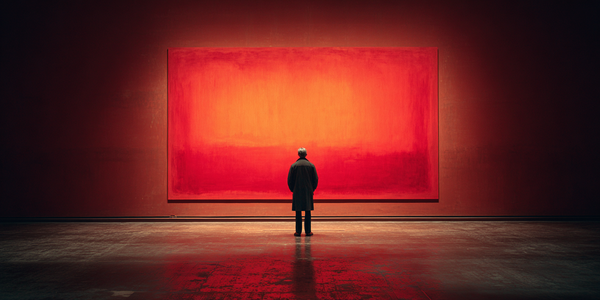
This isn’t to romanticize business. Cash flow matters. Bills must be paid. But perhaps we should give ourselves permission to admit what we’re really doing: not just building companies, but making art in the medium of commerce. Our canvases are business models, our pigments are ideas, our audiences are customers.
And maybe that’s the point. Profit is the applause, not the play. The real act is creation. And whether we admit it or not, every entrepreneur, deep down, is trying to make something worthy of hanging in the gallery of the world.
Here's to the crazy ones...the artists of business.